

Bedtime ritual: Why is it important and how to prepare it?
Not wanting to go to bed, fear of the dark, separation anxiety—getting infants and young children to fall asleep can sometimes be problematic. Establishing a bedtime ritual can help make this time peaceful and restful for everyone!
What is a bedtime ritual?
A bedtime ritual involves establishing a series of habits or activities shortly before your child’s bedtime to ensure they fall asleep in the best possible mindset, without anxiety related to the long separation of the night. It is a ceremony, more or less formal, during which you and your child agree on a small sequence of practices, carried out in the same way and in a pre-established order.
Why is it so important for babies and children?
A ritual provides a reassuring framework because it is repeated for your child: familiar cues that show them that since everything went well the night before, there’s no reason it won’t go the same way tonight. It helps structure the process of falling asleep and ensures it doesn’t drag on with additional requests (kiss, hug, or story). However, for this to work, the ritual needs to be well-defined and clearly understood.
Tips and tricks to establish a bedtime ritual?
Create a sleep-friendly atmosphere
No screens, not too much noise, dim lighting, and no overly exciting play. The last half hour before heading to the bedroom should be centered around calm and tranquility.
Create Your Ritual Together
No imposition, but rather suggestions that should be accepted by your child if they are old enough to express themselves. Explain to them every night that you will repeat this ritual and stick to it. However, nothing prevents you from evolving it over time, depending on their age or desires.
A Ritual for Two or Three: Don’t Leave Your Baby Alone
The ritual should not be a solitary time for the child. A quiet time alone can precede it, but once the ritual begins, stay with your child until you leave them for the night.
Don’t Stay Too Long and Let Them Fall Asleep on Their Own
The ritual should last 10 to 20 minutes, or even 30 minutes for older and more independent children, for whom you can include tasks like brushing teeth, personal hygiene, and putting on pajamas, for example. In any case, the ritual is designed to help your child fall asleep peacefully and on their own. It has a clear beginning and end. Once it’s finished, leave the room and don’t wait for your child to fall asleep. There’s also no need to force them to sleep with phrases like "Come on, it's time to sleep!"—which are rarely effective!
Handle the reminders differently
One ritual, and no more! Your child’s sleep is anything but an exact science. While they may fall asleep almost immediately at certain times, other periods will lead to constant requests: stress, nightmares, fear of the dark, etc. In these cases, don’t restart the entire ritual. You can return, give a hug, and reassure them by saying that you’re not far away. If the requests continue, gradually increase the distance each time. Enter the room to reassure them but without hugging the second time, then speak to them through the door, and so on. The separation should be gradual to avoid giving your child the impression that you will stay with them.
What age should you set up a bedtime ritual ?
Before 6 months
You typically won’t need to establish a ritual before 6 months, as the infant's sleep is mainly governed by feeding times (whether breast or bottle).
Between 6 and 12 months
As your baby approaches 6 months, you can begin to gradually introduce some cues, such as telling a first bedtime story or singing a lullaby in the evening, and engaging in more stimulating play in the morning. The idea is to help them differentiate clearly between nap time (between 2 and 4 hours a day) and nighttime sleep (10 to 12 hours).
Example of a Bedtime Ritual:
- Preparation for the night (pajamas, sleeping bag) with soft music
- Settling into bed followed by a short story
- A hug and a kiss from each parent
- And then turn off the lights!
From 12 months onward
Your baby is a thing of the past… your child is likely starting to crawl or even walk, they’re asking for games and stories, and baths are becoming more regular. It’s time to introduce a slightly longer ritual.
Example of a Bedtime Ritual:
- Start with a short story
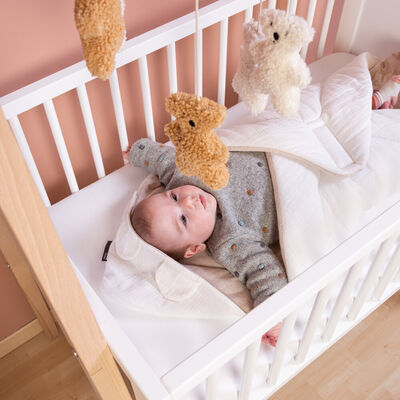
- Put the stuffed animals in the bed
- Turn on a nightlight or a night lamp
- Get into bed
- Play a podcast of "A Story and Olli" (you can stay by their side)
- A kiss and then turn off the lights!
After Two Years
Your child is now a bit more independent. They may begin dressing and undressing themselves, brushing their teeth, sitting in the bath, etc. You can accompany them in all these activities, but also allow them some time alone. A quiet period where your child plays on their own can easily be integrated into the ritual. If they want to retreat into their own world, let them, while still managing the timing.
Example of a Bedtime Ritual:
- Potty, brushing teeth, put on pajamas, and head to their room!
- A quiet time with their toys, with or without your presence, for 5 minutes
- A story together, comfortably settled in bed
- 5 minutes of conversation (about their day or the story you told)
- Turn on the nightlight, a kiss, and turn off the lights!